
After Digitalization: How to Securely Access Embedded Linux Devices in the Field
After digitalization, connected Linux devices need secure remote access for diagnostics, maintenance and lifecycle operations.

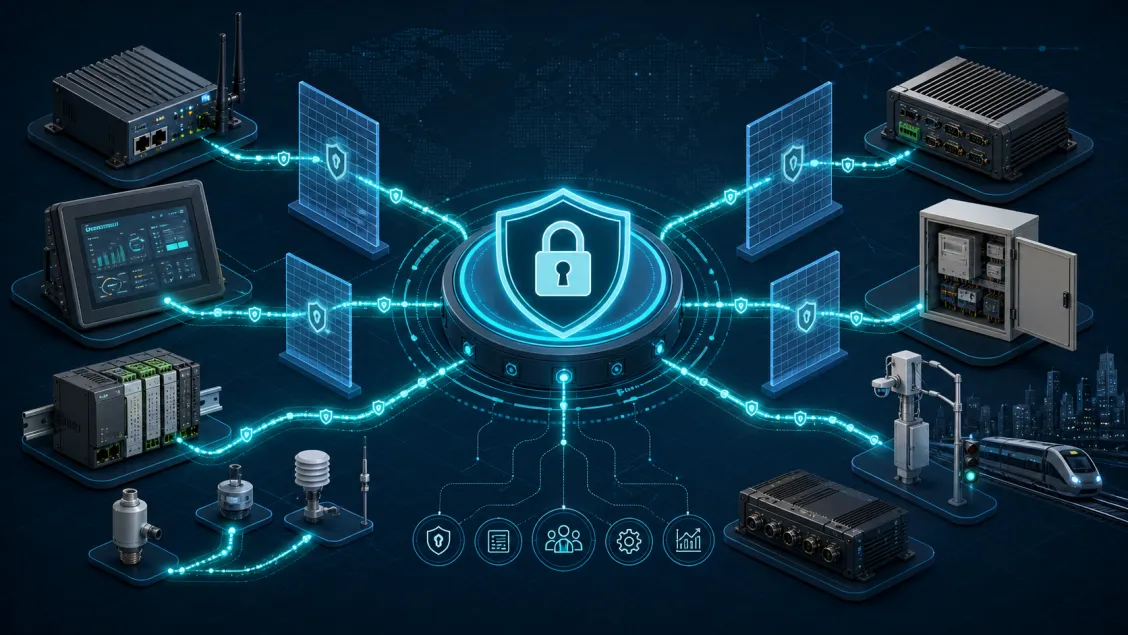
After digitalization, embedded Linux devices need secure remote access because they are often deployed across distributed field environments, behind NAT, firewalls, or customer networks. Without a controlled access model, teams may rely on field visits, shared credentials, exposed ports or ad hoc VPNs. Secure remote access helps engineering and support teams diagnose issues, inspect logs, maintain services and respond to incidents while preserving identity control, access governance and auditability.
Summary
This article explains why industrial digitalization creates a new operational challenge: securely accessing embedded Linux devices deployed in the field. It focuses on Linux-based gateways, HMIs, edge computers, and connected industrial equipment that often operate behind NATs, firewalls, mobile networks, or customer-managed infrastructure. The article argues that secure remote access becomes part of connected-device infrastructure, alongside updates, monitoring, diagnostics, and lifecycle management.
Digitalization changed what industrial devices are expected to do.
A machine, gateway, HMI, controller or edge computer is no longer only a local component installed next to the equipment it supports. In many environments, it is now part of a connected operation: collecting data, exchanging information with other systems, exposing services, sending logs, receiving updates and supporting remote maintenance.
That shift created real value. It helped companies move from isolated machines to more connected, observable, and adaptable infrastructure.
But it also introduced a new operational challenge.
Once Linux-based devices are deployed across factories, customer sites, field locations, vehicles, energy assets, retail environments or smart-city infrastructure, teams need a safe and repeatable way to access them.
The question is no longer only: how do we connect devices?
It becomes: how do we operate connected devices securely over time?
Connectivity is not the end of the project
In many digitalization projects, connectivity is treated as a milestone.
The device can send data. The dashboard is receiving information. The cloud integration works. The machine is no longer isolated.
That is an important step, but it is not the end of the operational problem.
A connected device still needs to be maintained. Services may fail. Logs may need to be inspected. Configuration may need to be adjusted. Security patches may need to be applied. Network conditions may change. A customer environment may block access paths that worked during development. A device may behave differently in the field than it did in the lab.
For embedded Linux devices, this is especially relevant because they often run more than a small firmware loop. They may include system services, network stacks, application processes, local storage, custom integrations, containers, user interfaces or edge workloads.
That flexibility is useful. It is also why operational access matters.
The field is not a clean network environment
A common mistake is assuming that field devices will be as easy to reach as devices in a development lab.
They usually are not.
Linux-based devices deployed in the real world often sit behind layers of network complexity:
- NAT and private IP addresses;
- firewalls and segmented networks;
- mobile or unstable connectivity;
- customer-managed routers and policies;
- industrial network boundaries;
- duplicate IP ranges across different sites;
- environments where inbound ports cannot be opened;
- locations where physical access is slow, expensive or impractical.
These conditions are normal in industrial and distributed operations. They are not exceptions.
As the number of connected devices grows, this complexity becomes harder to manage manually. What works for ten devices may not work for hundreds. What works in one facility may not work in another. What works for an internal team may not be acceptable in a customer-controlled environment.
That is where remote access stops being a convenience and becomes infrastructure.
The risk of improvised access
When secure access is not designed into the operational model, teams still need to solve problems. The pressure to restore service, collect logs, or inspect a device does not disappear.
This can lead to improvised approaches:
- Shared SSH credentials;
- Exposed ports;
- Manually configured firewall rules;
- Generic VPN access with broad network reach;
- Undocumented access paths;
- Dependence on someone physically present at the site;
- Limited visibility into who accessed what and when.
These patterns may solve an immediate support problem, but they create long-term risk.
The more devices that are connected, the more access paths need to be governed. Without a consistent model, remote maintenance can become difficult to audit, hard to revoke, and dependent on tribal knowledge.
In connected industrial environments, that is not just an IT concern. It affects availability, support quality, security posture, and the ability to scale operations.
Secure access is part of lifecycle management
A connected device has a lifecycle.
It is provisioned, deployed, monitored, updated, debugged, reconfigured, and eventually replaced or decommissioned. Each stage creates operational questions:
- Who is allowed to access the device?
- How is access granted and revoked?
- Can access be limited to the right user, device or namespace?
- Is there an audit trail of remote sessions?
- Can teams reach the device without exposing inbound ports?
- What happens when a device is behind a customer firewall?
- How quickly can support inspect a failure without sending someone on-site?
For Linux-based devices, SSH is often the practical interface for diagnostics and maintenance. It gives engineering and support teams a familiar way to inspect logs, check services, validate configuration, and investigate failures.
But SSH access needs governance.
Secure remote access is not simply about opening a path to a device. It is about controlling that path in a way that fits distributed operations.
Not every IoT device is the same
The term IoT is broad, and not every connected device has the same operational requirements.
A constrained sensor or microcontroller may not need Linux, SSH or the same maintenance model as an industrial gateway. Some devices are designed to send simple telemetry and run with minimal interaction. Others are complex systems that need diagnostics, updates, integrations and long-term support.
This article focuses on the second group: embedded Linux devices that act as operational assets in the field.
Examples include:
- industrial gateways;
- HMIs and operator panels;
- edge computers;
- Linux-based controllers;
- connected retail or payment equipment;
- energy and utility field devices;
- transportation and fleet infrastructure;
- smart-city gateways;
- remote monitoring units;
- customer-deployed appliances.
These devices often sit between the physical world and the digital systems that monitor, manage, or optimize it. Because of that position, they need to be reachable, maintainable, and secure throughout their lifecycle.
What a better access model should provide
A scalable access model for embedded Linux devices should reduce the need for unsafe workarounds.
At minimum, teams should look for a model that supports:
Access without exposing devices directly
Many field devices cannot or should not expose inbound SSH ports to the internet. A secure access model should work with real network conditions, including NAT and firewalls.
Centralized identity and access control
Access should be managed by users, teams and permissions, not by shared credentials passed between people.
Auditability
For operational and security reasons, teams need visibility into remote sessions: who accessed a device, when and for what purpose.
Fleet-oriented organization
As deployments grow, devices need to be grouped, named and managed in ways that reflect customers, sites, products or operational environments.
Operational simplicity
If the access model is too complex, teams may bypass it. Secure access needs to be practical enough for support and engineering teams to use during real incidents.
Compatibility with Linux workflows
For embedded Linux teams, SSH remains a familiar and powerful interface. The access layer should improve how SSH is governed, not force teams into an unnatural workflow.
Where ShellHub fits
ShellHub is designed for secure remote SSH access to Linux devices behind NAT and firewalls.
For teams operating embedded Linux devices in the field, this addresses a practical problem: devices need to be reachable for diagnostics and maintenance, but they should not require exposed inbound ports or uncontrolled access paths.
With ShellHub, organizations can centralize access to distributed Linux devices, manage who can reach them, and keep auditability over remote sessions.
That makes remote access part of the operational infrastructure around connected devices, alongside monitoring, updates, observability and incident response.
The next phase of connected operations
Digitalization made it possible to connect machines, devices and infrastructure that used to operate in isolation.
The next phase is about operating that connected environment responsibly.
For embedded Linux devices, this means thinking beyond connectivity itself. It means planning for secure access, controlled maintenance, lifecycle management and long-term support from the beginning.
Because once devices are deployed in the field, the ability to reach them safely can determine how quickly teams diagnose problems, respond to incidents, apply fixes and keep operations running.
Connectivity creates the opportunity.
Secure access makes it operational.