
Why Developers Still Love the Terminal for Remote Linux Access
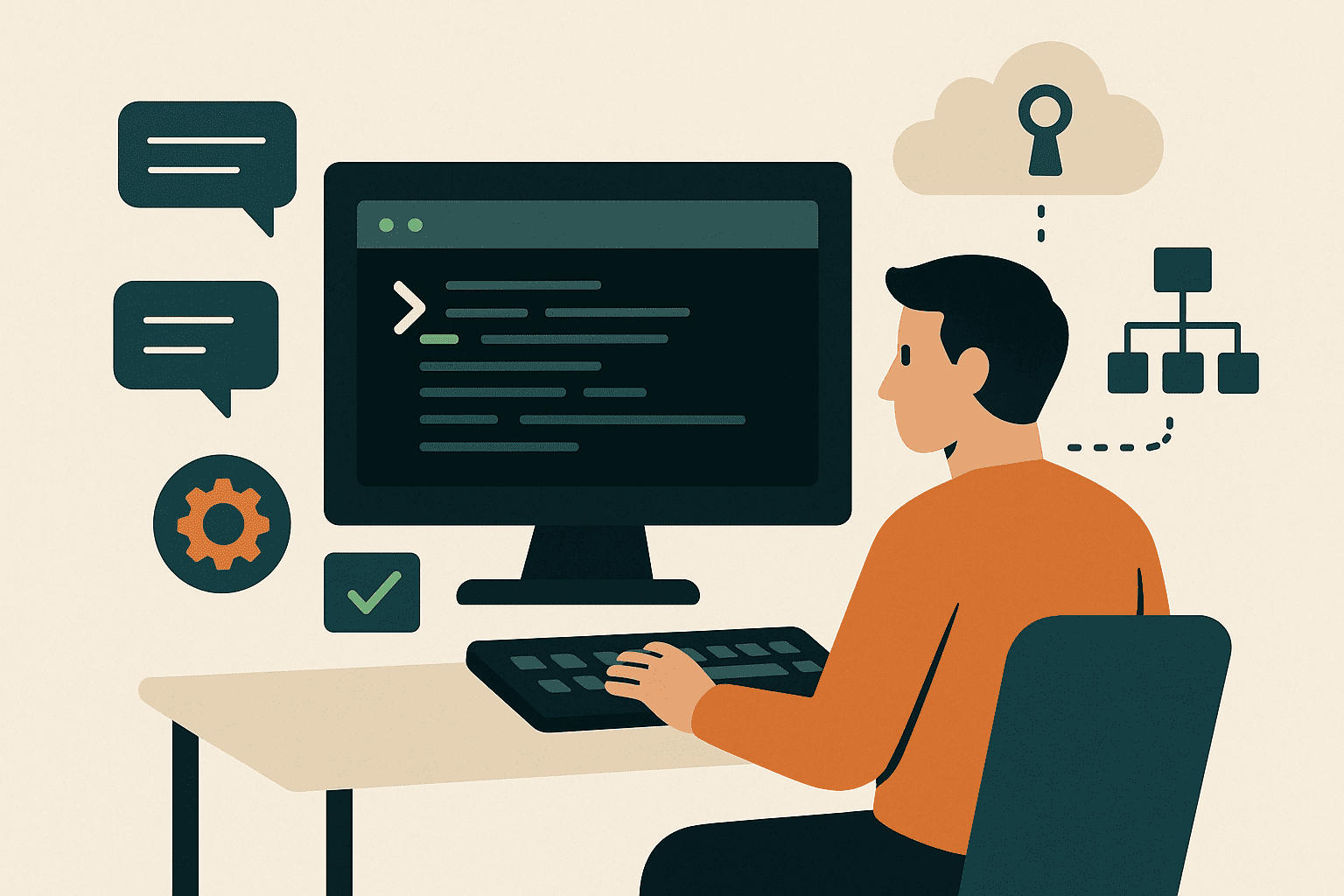
From embedded engineers to DevOps teams, developers have long relied on the terminal as their daily interface with machines. Whether you’re deploying firmware, managing fleets of IoT devices, or administering Linux servers, the terminal provides a direct, efficient, and powerful way to get work done.
In this article, we’ll explore why the terminal is such an essential tool and how ShellHub helps you take that power even further with secure, centralized remote access to your devices.
Quick summary
- Problem: Developers need fast, scriptable access to Linux systems, but remote access becomes harder with NAT, firewalls, credentials, and audit needs.
- Solution: ShellHub keeps terminal workflows intact while centralizing secure remote access to distributed devices.
- Best for: Embedded Linux teams, IoT providers, DevOps, SREs, and support teams managing remote fleets.
- Next step: Use ShellHub when direct SSH access is difficult, risky, or hard to manage at scale.
Why developers still rely on the terminal
Unlike graphical interfaces, the terminal offers:
- Speed and automation:
Execute complex operations in seconds with simple commands or shell scripts. - Fine-grained control:
Access low-level system capabilities and configuration that GUIs often hide. - Portability:
Scripts and workflows are easy to share across development environments, CI/CD pipelines, and production infrastructure. - Efficiency at scale:
Whether you manage 10 devices or 10,000, the terminal lets you orchestrate them with minimal overhead.
This is why professionals in embedded systems, cloud infrastructure, and security rely on terminal workflows daily.
The challenge: secure remote access at scale
While the terminal is powerful, connecting securely to distributed devices introduces real complexity:
- Firewall and NAT traversal:
Many devices are behind NAT or firewalls, making direct SSH connections unreliable. - Credential management:
Managing SSH keys or passwords across hundreds or thousands of endpoints quickly becomes a security liability. - Audit and compliance:
Organizations need to log and monitor sessions for security, but native SSH lacks built-in visibility. - User management:
Onboarding and revoking access for collaborators and teams is time-consuming.
That’s where ShellHub comes in.
How ShellHub modernizes remote terminal access
ShellHub is a cloud-native solution that makes it effortless to access and control all your devices remotely through a simple, secure web interface or terminal client.
Here’s how ShellHub addresses common pain points:
✅ No network reconfiguration required
Devices establish outbound connections to ShellHub, enabling you to connect even if they’re behind a NAT or firewall.
✅ Centralized access control
Manage who can access which devices with fine-grained permissions and team-based roles.
✅ Secure by design
All communication is encrypted end-to-end. You no longer need to manually distribute SSH keys or open ports.
✅ Auditing and session recording
ShellHub logs all connection activity for compliance and troubleshooting.
✅ Unified experience
Connect via your web browser or traditional SSH client, your terminal workflows remain intact.
Common use cases
ShellHub is trusted by:
- Embedded systems teams who need to debug and update devices deployed in the field.
- IoT solution providers manage thousands of endpoints globally.
- DevOps and SREs orchestrating remote Linux servers at scale.
- Manufacturers are simplifying maintenance and customer support for their connected products.
Keep your terminal workflow, improve remote access control
The terminal will always be at the heart of efficient, professional development and operations. ShellHub simply makes it accessible, manageable, and secure, so you can focus on building great products instead of wrestling with connectivity.
Next step
Ready to make remote Linux access easier to manage?